How Should Writing be Taught?
Nikka Pangan, Researcher
We all want our children to write well. The question most often asked is, how exactly does one become a good writer? Parents try their best to help, especially during these pandemic times. Some learned how to write in a certain way and are now trying to pass it on to the kids, who may or may not get it. Others are wondering if what they’re teaching is right in the first place.
But it’s clearly worth the effort. Studies show that students who improved in writing also demonstrated enhanced critical thinking as well as increased levels of imagination and creativity, which demonstrates the importance of learning to write well.
It’s a skill developed with time and patience and THE LEARNING LIBRARY understands this. Since 2006, we’ve developed our students’ reading and writing abilities starting from an early age and involved parents at every stage. Teacher Kembell Lentejas, our director and a professional reading specialist, discusses the different types of writing and shares ways to hone a child’s writing skills.
The different ways to write
There are various kinds of writing. Exposure to and practice in each type will allow your child to find out what he or she is best at.
-
Expository writing
Expository writing is delivering facts and information as opposed to telling a story. It requires the writer to research the topic, evaluate findings, and come up with a clear hypothesis or argument.
-
Descriptive writing
A descriptive essay utilizes figurative language, and uses sensory details to arouse emotion in a reader and create an association with them. Good descriptive writing allows the reader to feel and understand.
-
Narrative writing
Narrative writing is what is often used in creative or fiction writing, where the writer creates a story with characters and a plot. This is not limited to novels; it includes short stories, fables, even screenplays.
-
Persuasive writing
Persuasive writing is writing meant to influence the reader. The author uses logic or arguments in an attempt to convince readers of his or her point. Examples of these are reviews, criticism, and debate-style writing.
How to assess writing
How do you know if your child writes poorly or well? Teacher Kembell recommends the 6+1 Traits -- a consistent framework that you can use from grade level to grade level to assess the traits of good writing:
-
Voice. This is the way the writer personalizes the story. In your child’s writing, can you hear her own voice? Does the piece feel personal? Does it have its own tone?
-
Ideas. This refers to the meaning of the piece. What is your child presenting? What story is she trying to develop and portray?
-
Conventions. These are things such as grammar rules, capitalization, punctuation, and spelling. Does your child understands these rules when writing?
-
Organization. This is about the structure of the work. Is your child able to categorize thoughts and ideas into sections of the work? Is there a defined beginning, middle, and end?
-
Word Choice. Are the words she uses appropriate? Does she consistently use simple language only or is she trying to use “bigger” words?
-
Sentence Fluency. This is the way the words and phrases flow throughout the text. Do her sentences feel connected? Do they bring the reader along smoothly from introduction to conclusion?
-
Presentation. This is the overall appearance of the work. Is it presentable? Will the reader appreciate its look?
-
Ask yourself these questions when you read your child’s work. You can read more about the 6+1 framework here.
How do I encourage my child to write?
Begin with the end in mind. “Tell your child that if she wants to be effective in communication, she has to write well. This helps you spread your message to as many people as possible,” Teacher Kembell advises. Then try these tips at home:
-
Set the place.
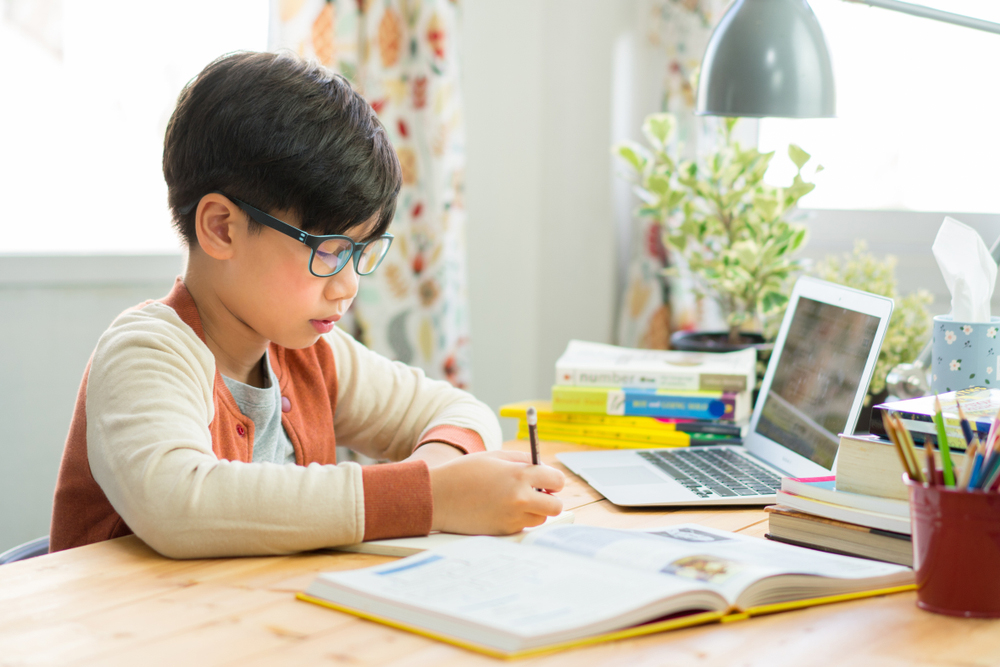
Ensuring that your child has the right environment is the first way to help them on their writing journey. Make sure they have a space where they can write, preferably a desk or table that is well-lit.
-
Start a writing log.
A writing log is a great way to get your child to begin writing. Here they write about anything that is of interest to them. If you’re having difficulty getting started, search online for writing prompts: there’s a lot for every grade level
-
Keep a journal or a private blog.
A physical journal allows your child to write freely about thoughts and emotions. (Teacher’s tip: allow your child to keep it private, something that is just theirs.) If they’re more inclined to write on a device, they can start a private blog. Using a website builder can also be a fun hobby for your child with the amount of creation tools available to them.
-
Be ready to help.
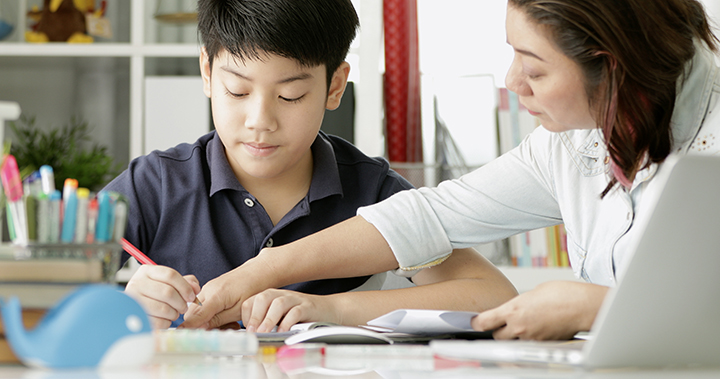
The much-needed guidance, collaboration and immediate feedback should come from you: be someone your child can talk to about their writing. Even if you may not be confident on the technical side, simply asking your children to clarify the details of their story or helping organize their thoughts goes a long way.
-
Use model texts.
A model text is a strong example of a piece you are trying to get your child to write. It helps show your child the correct structure and proper conventions that should be used in writing. By using this your child will develop a better understanding of what it means to write properly.
-
Practice.
Learning to write well is a continuous process. As Teacher Kim says, “Nobody can write well in one day. Students acquire things [knowledge] through mentoring. It’s really the guidance, collaboration, and immediate feedback.” Give your child enough time to practice and don’t get discouraged when you think it’s taking too long. Let them work on something over a long period and allow them to make mistakes.
Get Writing!
Now that you understand the benefits and how to assess your child’s skills and progress, you can have them start writing and enjoying it in no time!
If you’d like to have a teachers’ help, send a message to THE LEARNING LIBRARY through inquiry@learninglibraries.com and sign up for a free online writing assessment for your child.